Contact Us
|
WeChat
WeChat ID:842122368Scan to Connect
WeChat ID:842122368Scan to Connect

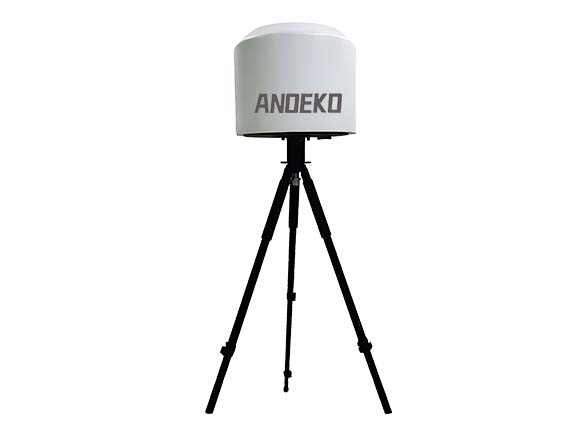
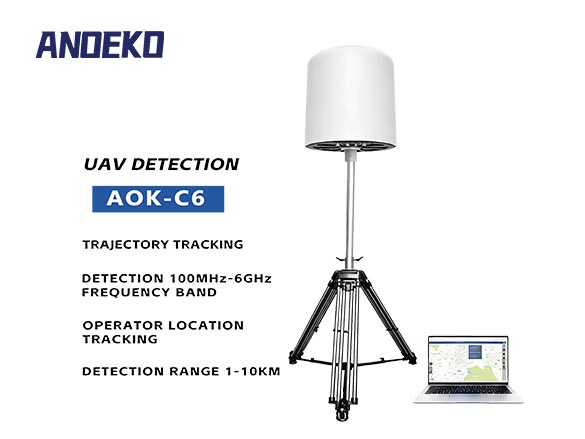
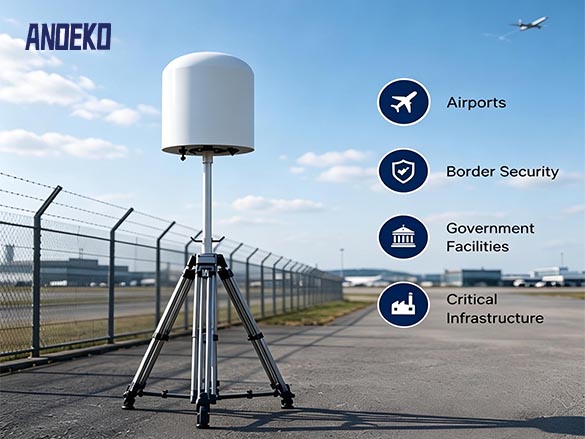
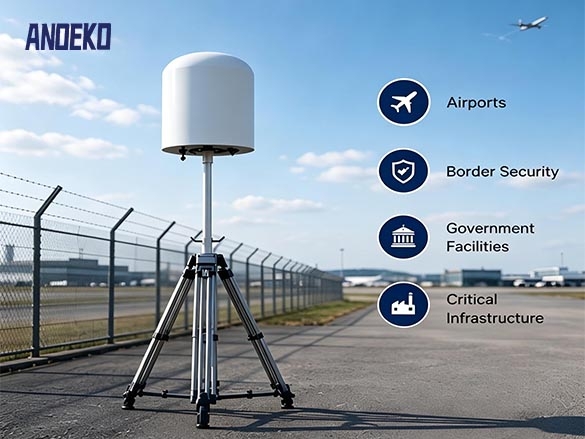
As unmanned aerial vehicles become increasingly accessible, unauthorized drone activity is creating new security challenges for airports, border areas, government facilities, industrial sites and critical infrastructure.
For these environments, effective low-altitude security begins with the ability to detect and identify potential drone activity before an appropriate response is considered.
The ANOEKO AOK-C06A is a long-range passive fixed drone detection system designed for continuous RF monitoring of low-altitude airspace. It provides 360-degree coverage, multi-target detection, drone identification and direction-finding capabilities in a fixed-site configuration.
With a specified detection range of 5–10 km, frequency coverage from 70 MHz to 6 GHz, and support for detecting at least 60 drones and 12 remote controllers, the AOK-C06A is designed to support professional counter-UAS monitoring applications.
Unlike active radar-based detection equipment, a passive RF drone detection system monitors radio-frequency signals associated with compatible unmanned aerial systems. This approach provides an additional layer of situational awareness without relying on the detector itself to transmit radar signals.
For security operators and system integrators, the AOK-C06A offers a practical foundation for building a networked drone detection and monitoring architecture.
A complete Counter-Unmanned Aircraft System (C-UAS) may combine multiple detection and response technologies.
Radar, electro-optical and infrared cameras, RF detection equipment and command-and-control platforms each provide different types of information.
Passive RF detection plays a particularly important role when a security system needs to monitor compatible drone-related radio-frequency activity.
The AOK-C06A uses passive RF monitoring to support the detection and identification of compatible drone signals and associated remote controllers.
Its key functions include:
Continuous RF signal monitoring
360° azimuth coverage
Drone identification
Remote-controller identification
Single-unit direction-finding and localization capabilities
Blacklist and whitelist management
Multi-target detection
Multi-device networking
Remote system access
By combining these functions in a fixed drone detection platform, the AOK-C06A helps operators obtain a clearer picture of relevant low-altitude activity.
It is important to distinguish passive detection from active mitigation. The AOK-C06A is a detection system, not a drone jammer. It can be integrated into a broader counter-UAS architecture that includes compatible radar, electro-optical, infrared and authorized mitigation equipment.
For fixed-site security, detection coverage is one of the first factors to consider.
A monitoring system must provide useful visibility across the protected area while supporting continuous operation.
The ANOEKO AOK-C06A offers a specified detection range of 5–10 km, depending on the operating environment.
Its 360° azimuth coverage supports all-direction monitoring around the installation, making it suitable for applications where potential drone activity may approach from different directions.
The actual detection range can be influenced by several factors, including:
The RF characteristics of the target drone
Signal availability and operating frequency
Terrain and surrounding structures
RF interference and electromagnetic conditions
Antenna installation and site configuration
For this reason, the 5–10 km specification should be understood as an environment-dependent detection range rather than a guaranteed distance for every drone model or installation.
For security planners, this distinction is important when designing monitoring zones and determining the number and placement of detection units.
Drone communication technologies operate across different radio-frequency bands.
A detection platform designed for professional counter-UAS applications therefore needs suitable frequency coverage to monitor a broad range of compatible RF signals.
The AOK-C06A supports a frequency coverage of 70 MHz to 6 GHz, with core frequency bands including:
868 MHz
915 MHz
2.4 GHz
5.8 GHz
This broad frequency coverage provides flexibility for monitoring different RF environments and compatible drone communication systems.
The system is designed to support RF drone detection across multiple frequency bands rather than focusing on only one operating frequency.
However, frequency coverage alone does not guarantee identification of every drone. Detection and identification depend on the signal characteristics, supported protocols and the system's recognition capabilities.
For professional buyers, it is therefore important to evaluate both the stated frequency range and the specific drone models or signal types that the system supports.
In complex security environments, detecting a single drone is not always sufficient.
A fixed monitoring system may need to identify multiple aircraft and associated remote controllers within the same observation area.
The AOK-C06A supports:
At least 60 drone targets
At least 12 remote-controller targets
Drone identification response within 1 second
Overall system response time below 5 seconds
These capabilities are designed to support monitoring environments where multiple RF targets may be present simultaneously.
Drone identification helps operators distinguish recognized targets from other observed RF activity, while remote-controller identification adds another layer of information to the monitoring process.
The system also supports blacklist and whitelist management.
A whitelist can help organize recognized or authorized devices, while a blacklist can help operators manage devices classified as unauthorized according to their security policies.
For professional security applications, target identification and classification should be evaluated against the actual drone models, protocols and RF conditions expected at the installation site.
Detection is only one part of an effective monitoring process.
When a potential drone target is detected, operators also need information that helps them understand its direction and assess the surrounding airspace.
The AOK-C06A provides 360° coverage and a specified direction-finding accuracy of ≤±15°.
Its single-unit localization capability supports target-direction assessment without requiring every installation to rely exclusively on a multi-unit network.
For larger or more complex protected areas, the system's multi-device networking capability can support a broader monitoring architecture.
This gives system integrators flexibility when designing fixed RF drone detection deployments for different site layouts.
Direction-finding accuracy should not be confused with absolute geographical position accuracy. Actual localization performance depends on the system configuration, target signal characteristics and installation environment.
Large infrastructure sites may require more than one drone detection unit.
Airports, industrial complexes, border areas and other extensive facilities often have different monitoring zones and operational requirements.
The AOK-C06A supports multi-device networking and remote access, allowing it to be incorporated into a broader fixed-site monitoring architecture.
This capability provides flexibility for system integrators working on projects that require multiple detection points and centralized monitoring.
Depending on the overall system configuration, multiple devices can form part of a coordinated RF monitoring solution.
The AOK-C06A can also be integrated with compatible equipment such as:
RF-based mitigation systems
Radar detection systems
Electro-optical cameras
Infrared observation systems
Centralized security management platforms
The purpose of integration is to combine different sources of information within a coordinated security architecture.
Actual interoperability depends on interface compatibility, software protocols and project-specific integration requirements.
Fixed drone detection equipment is often installed in environments where it must operate for extended periods under changing weather and temperature conditions.
The AOK-C06A is designed for 24/7 operation and outdoor deployment.
Its specified environmental and mechanical characteristics include:
IP66 protection rating
Operating temperature: −40°C to +55°C
Weight: ≤12 kg
Power specification: 50 W / 220 V
The IP66 protection rating supports protection against dust ingress and powerful water jets under the applicable test conditions.
The wide specified operating-temperature range makes the system suitable for consideration in different climatic environments.
For installation planning, buyers should also evaluate mounting arrangements, power availability, grounding, cable routing and site-specific environmental conditions.
The AOK-C06A is designed for fixed-site low-altitude airspace monitoring and can be considered for several professional security applications.
Airport Security
Airports require continuous awareness of unauthorized drone activity around sensitive airspace and ground infrastructure.
A passive RF drone detection system can provide additional information about compatible drone-related RF activity as part of a wider airport security architecture.
Any operational deployment must comply with aviation safety requirements and applicable spectrum regulations.
Border Security
Border monitoring environments may cover extensive outdoor areas and require continuous observation.
The AOK-C06A's 360° coverage, long-range detection capability and networking support make it a candidate for integration into broader border surveillance systems.
Government Facilities
Government buildings and restricted facilities may require additional monitoring of low-altitude airspace.
Fixed passive drone detection can contribute to a layered security arrangement by providing RF-based awareness of compatible drone activity.
Critical Infrastructure
Power facilities, industrial sites, transportation hubs and other critical infrastructure require security systems designed around their specific operational environments.
The AOK-C06A can be integrated with compatible detection and monitoring technologies to support a more comprehensive low-altitude security solution.
| Parameter | Specification |
|---|---|
| Product Model | AOK-C06A |
| Product Type | Passive Fixed Drone Detection System |
| Detection Range | 5–10 km, environment-dependent |
| Frequency Coverage | 70 MHz–6 GHz |
| Core Frequency Bands | 868 MHz / 915 MHz / 2.4 GHz / 5.8 GHz |
| Azimuth Coverage | 360° |
| Direction-Finding Accuracy | ≤±15° |
| System Response Time | <5 seconds |
| Identification Time | 1 second |
| Maximum Drone Targets | ≥60 |
| Remote-Controller Targets | ≥12 |
| Localization | Single-unit localization capability |
| Target Management | Blacklist and whitelist |
| Networking | Multi-device networking |
| Remote Access | Supported |
| Weight | ≤12 kg |
| Protection Rating | IP66 |
| Operation | 24/7 |
| Power Specification | 50 W / 220 V |
| Operating Temperature | −40°C to +55°C |
Specifications are based on the supplied product information. Actual performance may vary with target characteristics, RF conditions, installation and system configuration.
Selecting a fixed drone detection system involves more than comparing detection distances.
Professional buyers should consider frequency coverage, target identification, multi-target capacity, direction finding, networking, environmental protection and integration compatibility.
The ANOEKO AOK-C06A brings these considerations together in a passive RF monitoring platform.
Its main advantages include:
Wide RF Coverage: 70 MHz to 6 GHz frequency coverage with multiple core bands.
Long-Range Monitoring: Specified 5–10 km detection range, depending on the environment.
All-Direction Awareness: 360° azimuth coverage.
Multi-Target Capability: Support for at least 60 drones and 12 remote controllers.
Fast Identification: Specified 1-second identification time.
Flexible Deployment: Single-unit localization capability and multi-device networking.
Outdoor Protection: IP66-rated design and a specified operating temperature range of −40°C to +55°C.
System Integration: Compatibility-oriented integration with radar, EO/IR and authorized mitigation equipment, subject to interface and project requirements.
For system integrators, these features provide a useful starting point for developing fixed-site RF drone detection and low-altitude monitoring solutions.
Q1: What is the detection range of the ANOEKO AOK-C06A?
The specified detection range is 5–10 km. Actual results depend on the drone's RF characteristics, signal conditions, terrain, installation and surrounding electromagnetic environment.
Q2: Is the AOK-C06A an active radar or a passive drone detector?
The AOK-C06A is a passive RF drone detection system. It monitors compatible drone-related RF signals rather than functioning as an active radar transmitter.
Q3: What frequency range does the AOK-C06A support?
It supports 70 MHz to 6 GHz frequency coverage, with core frequency bands including 868 MHz, 915 MHz, 2.4 GHz and 5.8 GHz.
Q4: How many targets can the system detect?
According to the supplied specifications, the system supports at least 60 drone targets and at least 12 remote-controller targets.
Q5: Does the AOK-C06A provide 360-degree coverage?
Yes. The specified azimuth coverage is 360°, with direction-finding accuracy of ≤±15°.
Q6: Can the AOK-C06A work with other counter-UAS equipment?
Yes. It is designed for integration with compatible jammers, radar systems, EO/IR equipment and broader security platforms. Actual integration depends on hardware interfaces, communication protocols and applicable operating permissions.
Q7: Is the AOK-C06A suitable for continuous outdoor operation?
The system is specified for 24/7 operation, with an IP66 protection rating and an operating temperature range of −40°C to +55°C.
Looking for a long-range passive drone detection system for airport security, border monitoring, government facilities or critical infrastructure?
The ANOEKO AOK-C06A provides 360° RF monitoring, multi-target detection, drone identification and flexible system integration for professional low-altitude security applications.
Contact ANOEKO to discuss product specifications, installation requirements, system compatibility and project-specific integration needs.
ANOEKO – RF Detection and Low-Altitude Security Technology
Website: https://www.anoeko.com/
All equipment integration and operation must comply with applicable local laws, spectrum regulations, aviation safety requirements and relevant authorization procedures.
Consultation Hotline
+86 18948793112
Email:lisen1205@foxmail.com
Mobile:+86 18948793112
WhatsApp:+86 18948793112
Address:Changchun North Road, Gongming Street, Guangming District, Shenzhen, China
Copyright © Copyright © 2024 Anoeko Technology Co., Ltd. All Rights Reserved. | Anti-Drone & Low-Altitude Defense Experts ICP:粤ICP备13053733号-1